Matter and Material Causation
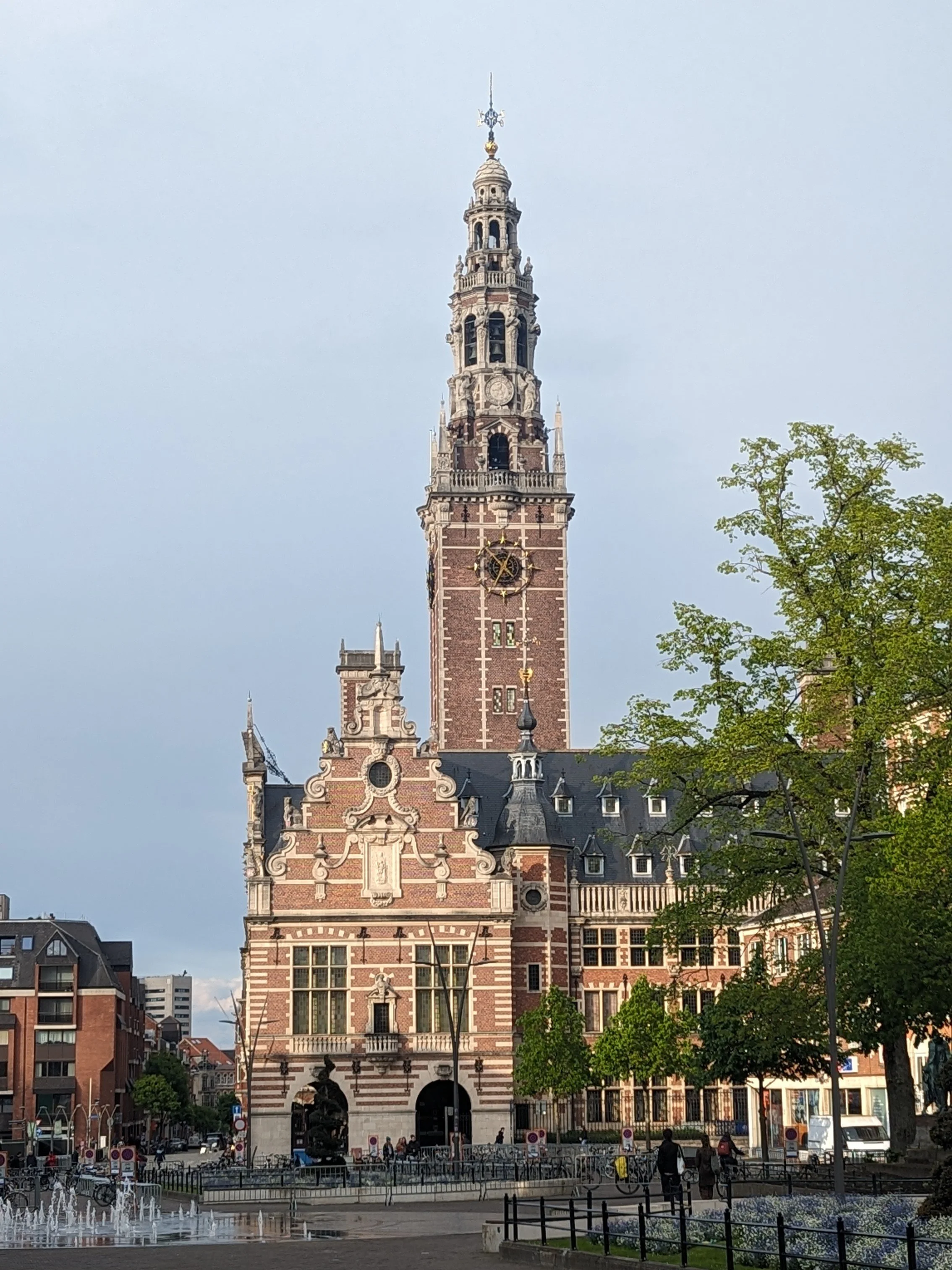
The University Library of the Catholic University of Leuven

This conference is supported by the European Research Council (ERC), via the European Union’s Horizon Europe research and innovation programme, under the project TRANSFORM (grant ref. no. 101201130).
For more information on the project, click here.
KU Leuven, August 28-30, 2026
Keynotes: Anna Marmodoro (Saint Louis University)
Filipa Afonso (University of Lisbon)
Gyula Klima (Fordham University)
Richard Cross (University of Notre Dame)
Provisional program: link
Conference series: Part II of The Four Causes (link)
What is the underlying stuff of the world? Matter.
What is matter? This is a difficult question, and answers, accordingly, have varied across the centuries. But the basic picture from the ancient Greeks into the early modern period is this: take a bottle, and melt it down. The shape—the form—is gone. But the underlying stuff, in this case glass, remains. In a parallel way, to cast a statue out of bronze is to impart a form onto matter that previously lacked it. Thus matter accounts for the underlying stuff of the world that survives change. And in a causal way, the glass supplies matter for the bottle as the bronze does for the statue, and so they are described as the material causes of each.
Over the centuries, this basic framework was adapted countless times, and spread far beyond the boundaries of physics. Philosophical psychology, for instance, took the mind to be analogous to matter, in that it is receptive of the forms of things. Logicians construed argument structure as form, referring terms like 'human' and 'horse' as logical matter, and debated where the boundary lay. Political philosophers construed the body politic as matter, structured or regulated by the form of law. And metaphysicians and theologians extended the framework to things like angels and the cosmos.
This conference will examine developments in thinking about matter through an interdisciplinary and multicultural lens, focusing in particular on the notion of matter in the Greek, Arabic, and Latin philosophical traditions of antiquity up to early modernism.
Background: this conference is part of a series, each instalment of which is dedicated to one of the four Aristotelian causes. This causal framework featured in all sorts of scientific explanations and demonstrations, covering issues from the existence and attributes of God to the natural phenomena of His creation, including the workings of the human mind and its role in determining human values and action. (For the rationale of the entire 4-year project see this page)